“a plant” search results (21000)

Flavor description of Ethiopian Coffee introduction to planting Environment
Large-scale coffee-growing villages account for about 35% of the country's total coffee production. These coffee farms, which use a multi-tier coffee planting system, are carefully cared for. Coffee farmers do not use chemical fertilizers, but use fallen leaves and animal and plant debris to increase soil nutrition. In addition to coffee, farmers also frequently grow non-coffee crops. It even accounts for the total amount of coffee in the country.
2016-09-19 Ethiopia coffee flavor description planting environment introduction large area
Where can coffee trees be planted in Yunnan under the coffee bean planting program?
There are mainly three kinds of coffee products in the business, and there are different categories under these three varieties. Arabica coffee (arabica) coffee is the most important and the best quality coffee beans, derived from esopian, is currently the most widely cultivated coffee. Liberica coffee comes from Rabindranath Basta (robusta) comes from fruit. The name of the latter indicates that it is rough.
2016-10-11 Planting coffee beans planning internal which place can coffee business
Costa Rica San Roman washing plant coffee beans cooked beans representative of Central and South America
The best coffee in Costa Rica seems to come from small processing plants, spread across several major coffee producing areas, including Tarazu and the western valley. This so-called coffee revolution originated 15 years ago and has greatly changed the way bean baking experts and importers think about Costa Rican coffee. Take the processing plant as the center, collect coffee beans from the surrounding small farms for processing, most of these farms are small societies
2016-05-10 Costa Rica Roman washing processing plant coffee cooked beans Central and South America representative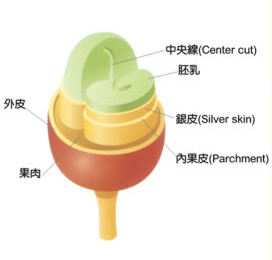
Coffee beans grow coffee beans seeds coffee raw beans Indonesia Mantenin boutique coffee cooked beans Sumatra
Coffee seeds cannot be grown directly with coffee fruits picked from coffee trees. Peeling coffee fruits is like planting peanuts. If you plant a peanut with a shell in the soil, it cannot sprout. You must plant peanuts. It is the same with medium coffee. If you have coffee fruit in your hand, you can first bask it in the sun and shake it until it is shaken inside.
2016-04-15 Coffee beans planting seeds coffee raw beans Neiman Tenin boutique cooked beans Sumen
The Green Dream of Yunnan Coffee
In 2012, Yunnan is expected to produce 60, 000 tons of coffee, accounting for 98% of the country's coffee production and 7/1000 of the world's coffee production. Pu'er City, as an important producing area of small grain coffee in Yunnan, by the end of 2011, the planting area of coffee is 439000 mu, the output is 28000 tons, the output value is 850 million yuan, the planting area and output account for more than half of the country respectively. This year, new plants will be planted in Pu'er City.
2014-04-27 Yunnan coffee green dream 2012 output forecast
Elida Manor Best of Panama Competition Volcano Milk Chocolate Citrus Flavor Light Baking
There are three ways of plantation: sunshine plantation, full shade plantation and semi-shade plantation. Plantations with more than 50 plants per hectare are fully shaded plantations, 25-50 plants are semi-shaded plantations, and less than 25 plants are called sunshine plantations. What is the effect of shading and shading on coffee in the plantations of the two neighbors with the same planting conditions? Shade plantations can slow down coffee
2016-07-12 Elida Manor Best Panama Competition Volcano Milk
How much is the Rwandan coffee bean per jin? Washing treatment bourbon at Muxiui treatment Plant in the western province of Rwanda
Mushonyi processing plant has an amazing award record. In addition to winning the COE Excellence Cup in 2010, it won the championship, 12th, 16th and 28th in four batches in 2011 alone!
2016-04-08 Rwanda coffee beans less money one jin western province Muxiu treatment plant washing treatment
Cultivation and cultivation of High-quality Coffee
(1) Seedling propagation Coffee seedling propagation can be divided into seed propagation and asexual reproduction. 1. Seed propagation (1) seed collection, seed washing and seed storage during the full ripening period of coffee (the full ripening period of medium-grain coffee in Hainan Island is from February to March, and that of small seed is from September to November). The fully ripe fruits are picked from strong and high-yielding mother trees to make seeds. Immediately after the fruit is harvested, peel and wash the seeds. The method is to place the fruit.
2014-10-16 Coffee knowledge boutique coffee science coffee cultivation
Cultivation techniques of Coffee Tree Seedling Propagation and Establishment of Coffee Garden
(1) Seedling propagation Coffee seedling propagation can be divided into seed propagation and asexual reproduction. 1. Seed propagation (1) seed collection, seed washing and seed storage during the full ripening period of coffee (the full ripening period of medium-grain coffee in Hainan Island is from February to March, and that of small seed is from September to November). The fully ripe fruits are picked from strong and high-yielding mother trees to make seeds. After the fruit is harvested, peel and wash the seeds immediately. The method is to remove the fruit.
2015-10-07 Coffee cultivation techniques seedlings propagation coffee garden establishment
"China Tropical and Subtropical Rare Plant Base"
Strengthen scientific research and reasonable arrangement. It is suggested that in the process of implementing ecological coffee garden construction, increase the planting intensity of precious tree species and dominant tree species suitable for planting in coffee garden. In the process of implementing ecological transformation of existing coffee garden, organically combine ecological coffee garden construction with precious tree species planting, based on making Pu 'er a precious plant (rare timber) in tropical and subtropical regions of China.
2014-07-30 China Tropical Subtropical Precious Plant Base Strengthening Scientific Research Rational Safe
Planting Environment and producing area of Yejia Coffee
1. Planting system and environment the mountain stream village in the Yega Xuefei producing area is cool and foggy, like spring all the year round, with a gentle breeze in summer, cool but not hot, rain but not damp, and no cold damage in winter, which is the best environment for planting Arabica. There are no large coffee plantations. Coffee farmers mix coffee with other crops, usually under banana trees, to form a unique landscape. 2. Deal with
2016-06-07 Yega Sheffield Coffee planting Environment producing area
Plant classification of coffee beans
Green trees and Rubiaceae plants have been dominated by plants with special effects since ancient times, such as quinine tree, which is regarded as a specific drug for malaria, and Dugen, which is used to treat amigellosis. Coffee is positioned as the most unique alkaloid drinking plant group. Usually after sowing for two to three years, coffee trees can grow to a height of about five to ten meters, but to prevent coffee beans from losing their aroma and taste, and
2016-05-25 Coffee beans plants taxonomy trees grasses since ancient times special efficacy
Introduction to the altitude of planting Environment in Yunnan Tieka Coffee planting Manor
Bourbon: this variety is derived from the iron pickup and was expanded by the French in 1708 on the island of Bourbon (now known as Reunion). Bobang also has a beautiful aroma and rich taste, higher yield and growth than iron pickup, suitable for planting in an area of 12002000 meters, but less resistant to diseases and pests, and more sensitive to strong winds and heavy precipitation. Wave
2016-07-15 Yunnan pickup coffee planting manor environment altitude introductionThe plants of Coffee
1. Scientific name, belonging to Rhbidceae (Rubiaceae). Rubiaceae is an herbaceous shrub with opposite leaves or whorls, flowers and bisexual fruits are berries. These plants can be used for medicine or dye. The flowers of coffee are hermaphroditic, so there is no distinction between male and female coffee beans. Most of the coffee fruits have two beans, called Plane Bean, and a small number of fruits contain only one bean kernel.
2014-08-22 Coffee plant scientific name belong to herbaceous Rhbidceae herb
Yunnan Tieka small Coffee Flavor description, Grinding degree, Taste characteristics, introduction to Fine Coffee
Dehong: it is known as the hometown of coffee in China. As of 2011, a total of 120900 mu of coffee has been developed and planted in the state, accounting for 30% of the total coffee planting area in the country. In the next 3 years, the planting area of coffee in Dehong Prefecture will reach 200000 mu. Coffee plants in Dehong Prefecture are all above 1000 meters above sea level, of which 30, 000 mu are planted in mountains above 1600 meters above sea level, plus coffee is grown in Dehong Prefecture.
2016-10-06 Yunnan pickup small grains coffee flavor description grinding taste characteristics boutique
How much is a kilo of coffee beans? how to buy coffee beans? Ethiopian native species sun-dried coffee raw bean price
Coffee seeds cannot be grown directly with coffee fruits picked from coffee trees. Peeling coffee fruits is like planting peanuts. If you plant a peanut with a shell in the soil, it cannot sprout. You must plant peanuts. It is the same with medium coffee. If you have coffee fruit in your hand, you can first bask it in the sun and shake it until it is shaken inside.
2016-04-15 Coffee beans less money one jin how to buy Ethiopia native sun coffee
Introduction to Robusta Coffee, the planting method of Kenyan Coffee varieties
The Kenyan coffee variety was first brought to Kenya to be planted in Bourbon bourbon. In the 1950s, through unremitting efforts, the then agricultural research institution Scott Laboratory selected two excellent hybrids, SL-28 and SL-34, subverting the long-standing prejudice that artificial breeding varieties are not excellent natural varieties. SL-28 and SL-34 help Kenyan coffee
2016-06-18 Kenya Coffee Variety planting way Robes Booth introduction
Introduction to the flowering and planting environment of Yunnan Hongguang coffee tree and the cost of planting beans
Coffee fruit contains two seeds, namely coffee beans. The two beans are connected face to face with each other on one side of the plane. Each coffee bean has a thin outer film, which is called silver skin, and its outer layer is covered with a yellow outer skin, called endocarp. The whole coffee bean is wrapped in a sticky pulp to form coffee pulp, which is soft and sweet.
2016-10-21 Yunnan Hongguang coffee what month flowering planting environment cost introduction
The basic knowledge of Coffee planting conditions
Coffee belt: coffee can not be grown in any environment, because it is originally a plant growing in a tropical rain forest, and in phylogeny, it forms the habit of requiring calm wind, cool, shaded or semi-shaded and humid environment. Therefore, coffee has strict requirements on planting conditions. We call the strips on both sides of the equator, between latitudes 25 degrees south and north, suitable for coffee growth as coffee belts. 1 、
2015-04-23 Coffee planting conditions basics common sense coffee is in any environment can
Varieties and planting areas of Salvadoran Coffee Siberia Manor in Kuskabapa region
The civil war in coffee varieties caused chaos and affected economic development, but ironically allowed coffee antiquities to be preserved, and the situation was so chaotic that coffee producers in El Salvador failed to catch up with the renewal of coffee varieties in Central and South America. El Salvador produces 100% Arabica coffee, of which 68% is Bourbon, Coffea arabica var. Bourbon), 29% Pa
2016-06-17 El Salvador Coffee Variety planting producing area Cuz Caba region Sibei Lee